
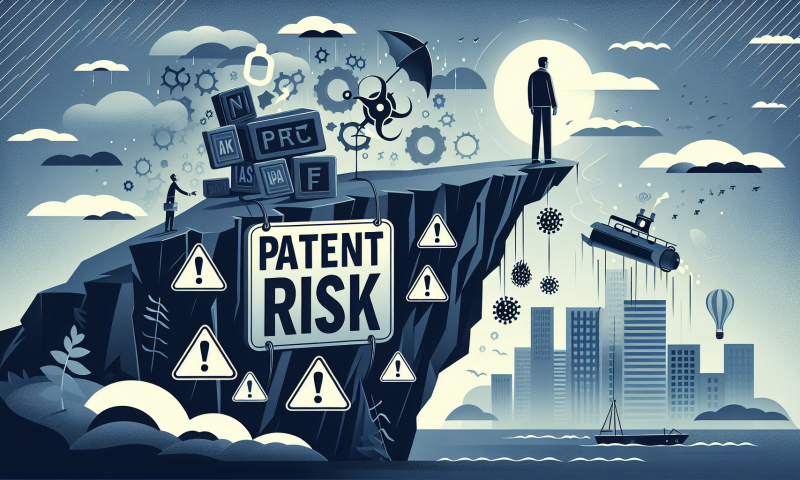
The pharmaceutical industry faces a relentless countdown that strikes fear into the hearts of executives and creates golden opportunities for informed investors. When blockbuster drugs lose patent protection, revenues can plummet by 80-90% within months as generic competitors flood the market. This phenomenon, known as patent cliff risk, represents one of the most predictable yet impactful events in biotech investing.
Patent cliff risk occurs when pharmaceutical companies lose exclusive rights to their top-selling medications, opening the floodgates for generic competition. Unlike other market disruptions, these events are entirely foreseeable—patent expiration dates are public information. Yet many investors fail to capitalize on the predictable market dynamics that follow.
For biotech investors, understanding patent cliff risk becomes crucial when evaluating portfolio companies and market opportunities. Companies heavily dependent on a single blockbuster drug face existential threats when patents expire. Humira, once the world’s best-selling drug with annual sales exceeding $20 billion, exemplifies this challenge. AbbVie’s revenue took a significant hit as biosimilar competitors entered major markets, demonstrating how even pharmaceutical giants cannot escape patent cliff risk.
The mathematics of patent cliffs are sobering. Research indicates that branded drugs typically lose 80-90% of their market share within 12-24 months after generic entry. This dramatic shift creates immediate pressure on companies to replace lost revenue through new drug approvals, acquisitions, or market expansion strategies. Companies that fail to prepare adequately often see their stock prices crater alongside their revenue streams.
Savvy investors can leverage patent cliff risk as a strategic advantage rather than viewing it solely as a threat. Generic drug manufacturers and biosimilar developers represent obvious beneficiaries, but the opportunities extend far beyond these direct competitors. Contract research organizations often see increased business as pharmaceutical companies scramble to accelerate pipeline development. Medical device companies may benefit as healthcare providers seek cost-effective alternatives to expensive branded therapies.
The timing of patent cliff risk creates distinct investment windows. Three to five years before patent expiration, pharmaceutical stocks often trade at discounts as investors begin pricing in future revenue declines. This period frequently presents buying opportunities for companies with robust pipelines or strategic acquisition plans. Conversely, the 12-18 months immediately preceding patent expiration typically offer optimal exit points for long-term holders.
Analyzing patent cliff risk requires examining multiple factors beyond simple expiration dates. Regulatory exclusivities, international patent variations, and litigation outcomes can extend or accelerate timeline expectations. The complexity of modern biologics also influences generic competition timelines, as biosimilar development requires significantly more time and investment than traditional small-molecule generics.
Geographic considerations add another layer to patent cliff risk assessment. Patent expiration dates vary by country, creating staggered revenue impacts. European markets typically see generic competition earlier than U.S. markets, providing preview insights into competitive dynamics and pricing pressure patterns.
The pharmaceutical industry’s response to patent cliff risk has evolved considerably over recent decades. Companies now employ sophisticated lifecycle management strategies, including new formulations, combination therapies, and indication expansions to extend market exclusivity. These tactics can delay but rarely eliminate the eventual impact of patent expiration.
Patent cliff risk fundamentally reshapes how biotech investors should approach portfolio construction and risk management. Rather than avoiding companies facing patent expirations, successful investors learn to identify which companies have prepared adequately and which generic competitors are positioned to capture market share. The predictable nature of patent cliff risk, when properly analyzed, transforms from a source of uncertainty into a powerful tool for generating alpha in biotech portfolios. The key lies not in predicting whether patent cliffs will occur—they inevitably will—but in understanding how different stakeholders will navigate these transitions and positioning investments accordingly.