
Protein products made from soy, peas, algae or fungi have gained a foothold in the market as a vegan alternative to meat, fish and milk. Consumers have a variety of reasons for the increased demand, ranging from animal welfare, climate and resource protection to a healthier diet.
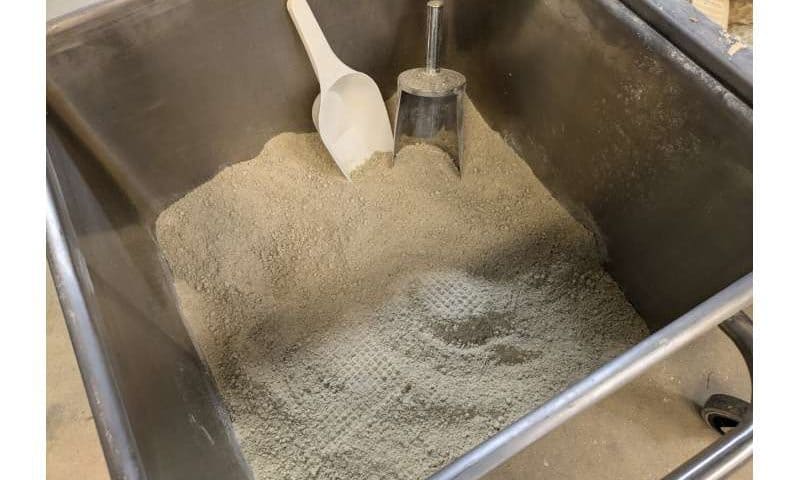
Researchers at the Fraunhofer Center for Chemical-Biotechnological Processes (CBP) in Leuna, Germany, have now shown that previously rarely used rapeseed proteins are also a valuable source of protein alternatives: using the EthaNa process, they extract not only high-quality rapeseed oil from rapeseed, but also a protein-rich rapeseed kernel concentrate, which can be processed for instance into burger patties and pasta or used as a nutritious feed in poultry fattening.
The oil makes up about 40% of the ingredients, but about 20% of the ingredients in rapeseed come from the sought-after proteins. Rapeseed proteins are similar in composition to milk proteins and are therefore—in principle—well suited as a plant protein source—both for food and animal feed. However, they have not yet been used in food products.
The reason for this is that the structure of the proteins is altered during the conventional hot pressing of rapeseed—the proteins denature. In addition, the resulting rapeseed meal also contains fibers and bitter substances from the rapeseed hulls. This impairs their compatibility as animal feed, which is why soy extraction meal is usually added to the feed mixtures. The feed soy, however, comes mainly from South America, where rain and savannah forests are still being cut down to gain arable land for its cultivation.
Mild extraction of de-hulled rapeseed enables the utilization of rapeseed proteins
For a good two years now, a pilot plant has been in operation at the Fraunhofer Center for Chemical-Biotechnological Processes CBP in Leuna that gently breaks down de-hulled rapeseed kernels and fractionates them using ethanol as a sustainable solvent, which is called EthaNa process (ethanolic native extraction). Due to the mild process conditions in the EthaNa plant—a maximum temperature of 70°C and normal ambient pressure—the structure of the rapeseed proteins is hardly changed during processing, meaning that they can be used in a variety of ways.
This is made possible by the underlying process principle.
“Due to the poor solubility of rapeseed oil in ethanol, the oil is displaced from the seeds so that it is directly available as free oil and does not have to be extracted from the solvent at high temperatures,” explains Dr. Robert Hartmann, Head of the Biomass Fractionation Group at Fraunhofer CBP.
Another advantage of the process is that fatty acids and molecules containing phosphorus, which would impair the quality of the oil, dissolve well in ethanol. The oil obtained therefore achieves pre-refining quality without any further processing steps.
A separate de-hulling system is also installed upstream of the extraction process to separate the oil- and protein-rich kernels from the hulls. This prevents fibers and some of the bitter substances that reduce the quality of conventional rapeseed meal from entering the EthaNa plant and therefore the protein-rich concentrate.
Since commissioning, the EthaNa process has been continuously optimized. The result: In addition to the hull fraction, the oil and the ethanolic extract, a protein-rich rapeseed concentrate remains, which is characterized by a high protein content of more than 50% and a low residual oil content of less than 5%.