
Parkinson’s disease (PD) is a neurodegenerative disorder that causes tremors, body stiffness and other difficulties with movement and balance, which progressively worsen over time. While there is currently no cure for PD, one treatment that has proved promising for alleviating symptoms of the disorder is deep brain stimulation (DBS).
DBS is an invasive surgical procedure that entails drilling small holes into a patient’s skull to implant electrodes into specific brain regions, while also introducing a battery pack under the skin of the chest. The implanted electrodes are then used to deliver mild but continuous electrical impulses to targeted brain regions.
While past studies have shown that DBS can effectively reduce the severity of PD symptoms, the effects of this treatment on the brain are still poorly understood. Neuroscientists and medical researchers have recently been trying to shed more light on the neural mechanisms via which DBS might benefit individual patients with PD.
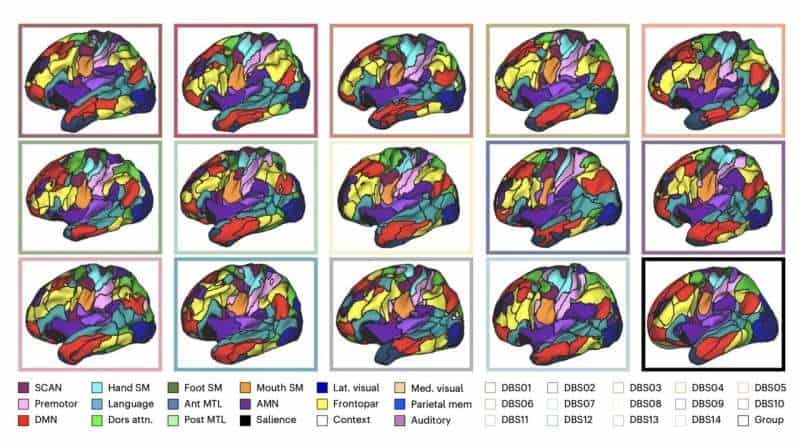
Researchers at Tsinghua University, Changping Laboratory and other institutes recently carried out an imaging study that closely examined the effects of DBS on interconnected brain regions that work together to support specific functions. Their findings, published in Nature Neuroscience, offer new valuable insight that could potentially help to carefully plan DBS-based treatment interventions for PD, based on the brains of individual patients.
A long-term brain imaging study
To carry out their study, the researchers recruited 14 people diagnosed with PD who were undergoing DBS treatment and thus had electrodes implanted in their brain. The team periodically examined the brains of these patients over a 1-year period, using three different imaging techniques.
Concurrently, they also collected the same types of brain imaging data from 27 people with no known medical diagnoses. This data was later compared with the scans gathered from the patients with PD, to uncover any differences in brain connectivity.
“We used 3-T magnetic resonance imaging (MRI)-compatible DBS and precision imaging to collect extensive data from 14 patients with PD who received DBS,” wrote Jianxun Ren, Changqing Jiang and their colleagues. “Across five timepoints spanning 1 year, each patient underwent 11.7 hours of functional MRI (fMRI) under seven stimulation conditions (30–172 min per session), 2.2 hours of structural MRI (26 min per session), 1.3 hours of diffusion-weighted MRI (16 min per session) and neurological assessments.”
When they analyzed the data they collected, Ren, Jiang and their colleagues found that DBS helped to restore communication between different cooperating brain regions in the brains of patients with PD. In addition, they were able to pinpoint two main brain circuits that appeared to be affected differently by DBS, known as the primary motor and the globus pallidus circuits. These two brain circuits are known to support the control of movement and coordination, respectively.
Interestingly, the researchers observed variations in how the brain connectivity of individual patients changed in response to DBS treatment. These changes appeared to predict the extent to which their symptoms improved after undergoing DBS.
“DBS normalizes connectivity in the somatocognitive action network and evokes differential responses in two distinct neurocircuits: the primary motor and globus pallidus circuits,” wrote the authors. “Target cortical functional connectivity predicts clinical outcomes. This densely sampled dataset provides reliable, individually specific functional measures and is shared with the community to accelerate research into DBS mechanisms and improve personalized treatment strategies.”
Towards personalized PD treatments
This recent study offers one of the most detailed pictures to date of the effects of DBS on brain circuits that are disrupted in PD. Using a combination of imaging techniques, the researchers were able to gain new insight into how the brain circuits adapt in response to DBS, under different brain stimulation conditions.
In the future, the findings gathered by Ren, Jiang and their colleagues could help to devise more effective and personalized therapeutic interventions for PD. For instance, they guide doctors and help them to best incorporate DBS into a patient’s treatment plan, changing stimulation conditions based on the unique brain landscape and needs of individual patients.