
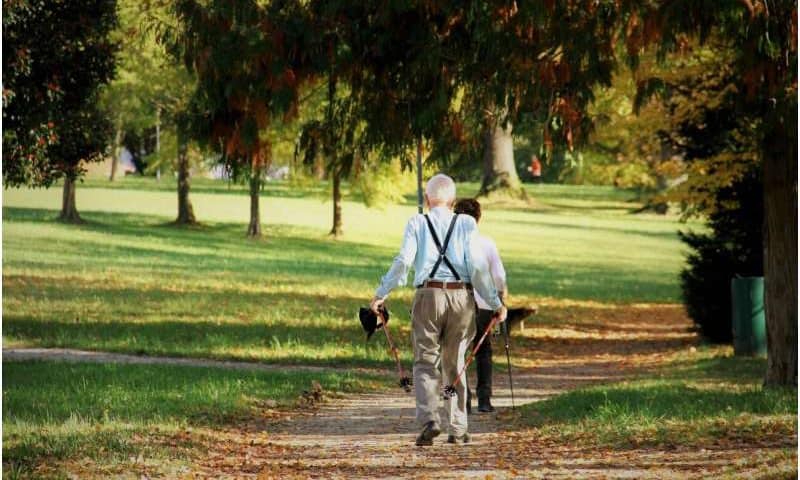
It’s no secret that exercise benefits both the mind and body, and it’s increasingly being recognized as a powerful tool for maintaining healthy brain aging. A new study in Alzheimer’s Research & Therapy says that just engaging in physical activity isn’t enough. The researchers found that how you structure your workouts, such as the way individual sessions are spaced and organized, may matter even more for healthy brain aging than the total amount of activity.
Participants who took part in structured physical activity sessions defined by the researchers as at least 10 minutes of movement at a pace of 40 steps per minute or more showed a clear advantage. They had lower levels of white matter hyperintensity burden, a key marker of cerebrovascular injury, compared to those who didn’t engage in such sessions.
Identifying the beneficial elements
Studies have found that engaging in physical activity can improve cognitive abilities, reduce the risk of dementia, and help maintain healthy brain structure in older adults. However, much of this data comes from observational research. These findings have not always been replicated in randomized controlled trials, which mostly showed mixed outcomes.
These differences may stem from the wide variability in how physical activity programs are designed for brain health and from our limited understanding of which elements of exercise—intensity, duration, or frequency—deliver the greatest benefits for brain health. Addressing this gap is essential to developing evidence-based physical activity recommendations that older adults can follow to protect their cognitive health and reduce their risk of dementia.
Identifying these elements comes with its own set of methodological challenges, which range from reliance on broad measures like total daily steps or time spent in moderate-to-vigorous activity to using self-reported or general measures. Advances in wearable technology have opened up the way to examining real-world movements down to every minute, which is significantly more accurate than asking a person to remember their exercise routine.
Tracking the real-time session data
Taking advantage of this technology, researchers tracked 279 adults aged 40 to 91 who did not have dementia. Each participant wore a Fitbit, a wrist actigraphy monitoring device, for 30 consecutive days, which captured everything from intentional exercise to everyday movements like household chores. The team included a wide age range for participants to better gauge how physical activity may affect the brain differently as we age.
The researchers designed a novel algorithm to identify intentional sessions of movement from continuous Fitbit data, where a session was defined as at least 10 minutes of walking at 40 steps per minute or faster. Based on the data, they divided the group into: exercisers, who completed at least one session that met the rules above, and non-exercisers, who completed zero intentional sessions.
To analyze the impact of physical activity, the team conducted high-resolution MRI scans to measure the size of specific brain regions and the health of white matter. They also asked participants to complete brain games designed to test their memory, mental speed, and problem-solving skills.
In total, 79% of the cohort completed at least one physical activity session during the monitoring period. For such exercisers, session frequency and session cadence emerged as the top predictors of brain health. These factors are closely linked to better white matter health and stronger executive function, with the benefits being more pronounced in women than in men.
Even for the 21% who didn’t engage in structured 10-minute sessions, staying active in some way showed benefits, as higher total daily step counts were associated with better brain health.
The study showed that shorter, more frequent sessions of brisk physical activity may be most effective for supporting cognitive health in older adults. It further reinforced a key public health message: any activity is better than none when it comes to protecting the aging brain.