
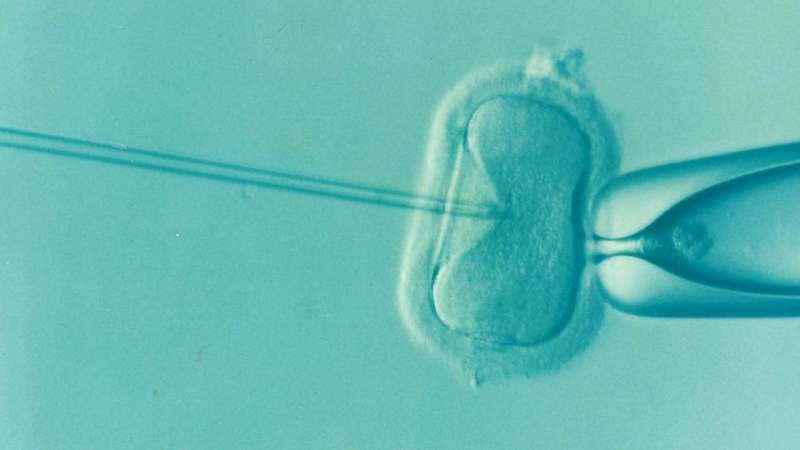
Collaborating institutions in Taiwan report higher risks of atopic disease among children conceived via assisted reproductive technology compared to those conceived naturally.
Assisted reproductive technology use has increased, with estimates placing assisted reproductive technology at 1% to 4% of births, especially in high-income societies, alongside wider use of embryo transfer.
Atopic disease covers three conditions; asthma, allergic rhinitis, and atopic dermatitis. Atopic diseases are believed to be influenced by genetic factors and environmental triggers, with developmental origins of health and disease theory proposing that fetal-stage factors can program changes in organ and tissue structure and function.
Childhood asthma is recognized as the most prevalent chronic disease in children that burdens caregivers, reduces school attendance, and diminishes quality of life.
Previous studies have examined whether assisted reproductive technology is associated with asthma risk, with some studies suggesting higher risk and others finding no association. Some have proposed milder asthma symptoms until adulthood among individuals conceived through assisted reproductive technology and a 2024 report found no association at all.
When research reaches mixed results across studies, one of the ways to capture a more convincing perspective is to find a bigger sample size.
In the study, “Atopic Disease Development in Offspring Conceived via Assisted Reproductive Technology,” published in JAMA Network Open, researchers conducted a retrospective, population-based cohort analysis to investigate whether conception via assisted reproductive technology was associated with atopic disease development in offspring.
Data came from a pool of 23.5 million people in Taiwan through Taiwan’s National Health Insurance Research Database, Assisted Reproduction Database, and the Maternal and Child Health Database.
Assisted reproductive technology included procedures such as in vitro fertilization and embryo transfer, intracytoplasmic sperm injection, gamete intrafallopian transfer, zygote intrafallopian transfer, and tubal embryo transfer.
Cohort groups included 13,957 children conceived via assisted reproductive technology and 55,828 children conceived naturally after 1:4 matching by maternal age, neonatal sex, and birth month.
Asthma, allergic rhinitis, and atopic dermatitis were analyzed and reported individually, allowing a child to receive one, two, or all three diagnoses during follow-up. Mean follow-up for asthma measured 7.99 years in the assisted reproductive technology group and 8.41 years in the control group, with allergic rhinitis at 5.79 and 6.34 years, and atopic dermatitis at 7.34 and 7.62 years.
Risks differed by conception type
Baseline characteristics differed between groups. Parental allergic rhinitis appeared more often in the assisted reproductive technology group for paternal history at 26.4% vs. 22.3% and maternal history at 32.2% vs. 29.1%. Gestational diabetes occurred at 2.9% vs. 1.7% and preeclampsia or eclampsia at 1.0% vs. 0.4%. Cesarean delivery occurred at 65.6% vs. 42.0%. Multiple births occurred at 30.5% vs. 2.0%. Low birth weight under 2500 g occurred at 27.4% vs. 7.9%. Preterm birth under 37 weeks occurred at 29.0% vs. 9.1%.
Cumulative incidence patterns differed for asthma, allergic rhinitis, and atopic dermatitis between groups. Crude hazard ratios exceeded 1 for asthma at 1.22, allergic rhinitis at 1.17, and atopic dermatitis at 1.07.
Adjusted models retained elevated hazard ratios. Asthma showed an adjusted hazard ratio of 1.13, allergic rhinitis showed 1.15, and atopic dermatitis showed 1.08.
Patterns observed
Intracytoplasmic sperm injection use showed no statistically significant differences in risk estimates across the three outcomes. Adjusted hazard ratios measured 1.04 for asthma, 0.99 for allergic rhinitis, and 1.04 for atopic dermatitis.
Fresh embryo transfer carried a higher allergic rhinitis risk than frozen embryo transfer, with an adjusted hazard ratio of 1.12. Asthma showed no statistically significant difference between fresh and frozen embryo transfer, with an adjusted hazard ratio of 0.96, and atopic dermatitis showed no statistically significant difference, with an adjusted hazard ratio of 1.01.
Interaction testing showed no statistically significant interaction between intracytoplasmic sperm injection and embryo type for asthma, allergic rhinitis, or atopic dermatitis.
Clear signals
Researchers conclude that children conceived via assisted reproductive technology had a higher risk of developing asthma, allergic rhinitis, or atopic dermatitis than children conceived naturally. Findings supported an association between assisted reproductive technology conception and later atopic disease development across the outcomes evaluated.
Researchers called for long-term follow-up for offspring conceived via assisted reproductive technology and further investigation into underlying biological mechanisms which may contribute to atopic disease development.